Small amount invoice in Germany: receipts up to €250
Short answer: Germany's small amount invoice (Kleinbetragsrechnung) covers receipts up to €250 including VAT. Under § 33 UStDV it needs only the seller's name and address, the date, what was bought, and the gross amount with the VAT rate. Your name and an invoice number can be missing. You can still deduct the VAT from such a receipt.
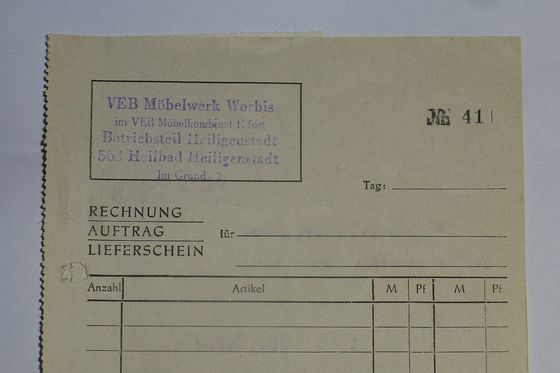
Most of the paper that piles up in a freelancer’s expense folder is small. Train tickets, a USB cable, a lunch with a client, a box of printer paper. Almost none of it shows your name. German VAT law is fine with that, up to a point, and the point is €250.
The rule is called Kleinbetragsrechnung, literally small amount invoice, and it sits in § 33 of the VAT Implementing Ordinance (UStDV). Until 2016 the limit was €150. It has been €250 since 2017.
What a small amount invoice must show
Four things, according to § 33 UStDV:
- The seller’s full name and address.
- The date of issue.
- The quantity and description of the goods, or the type and scope of the service.
- The total price including VAT, plus the VAT rate. For exempt sales, a note on the exemption.
Everything else on the full list for larger invoices can be missing. That includes your name and address, an invoice number, the seller’s tax number, the date of supply and a separate VAT amount. The full list is covered in the article on German invoice requirements.
| Criterion | Over €250 gross | Up to €250 gross |
|---|---|---|
| Seller's name and address | ||
| Buyer's name and address | ||
| Tax number or VAT ID | ||
| Invoice number | ||
| Date of issue | ||
| Date of supply | ||
| Description of goods or service | ||
| Separate VAT amount | ||
| VAT rate | ||
| E-invoice needed from 2027/2028 | yes (B2B) |
Source: § 14(4) UStG, § 33 UStDV
How to work out the VAT from a receipt
Small receipts often show only the gross price and a rate. You calculate the VAT yourself: gross × rate ÷ (100 + rate). For 19 % that is gross × 19 ÷ 119. For 7 % it is gross × 7 ÷ 107.
- Gross amount on the receipt
- €59.90
- VAT: 59.90 × 19 ÷ 119
- €9.56
- Net: 59.90 − 9.56
- €50.34
- Input VAT you can deduct
- €9.56
Bookkeeping software does this automatically once you pick the tax code. Check it by hand when a receipt mixes rates. At a German bakery, a takeaway sandwich is taxed at 7 % and the coffee at 19 %, on the same slip. Till receipts mark the rates with letters such as A and B and explain them at the bottom.
Which slips count and which do not
| Document | Valid as an invoice? | Why |
|---|---|---|
| Till receipt with shop address and VAT rate | yes | Meets § 33 UStDV |
| Card terminal slip | no | Shows the payment, not the goods |
| Deutsche Bahn ticket | yes | Travel ticket, own rule in § 34 UStDV |
| Online order confirmation | no | Confirms the order, the invoice comes separately |
| Handwritten note without the seller’s address | no | Seller’s name and address missing |
The card slip is the classic mistake, especially for people used to keeping only the card receipt at home. With online shops, the real invoice often appears days later as a download in your customer account. You have to fetch it.
When the shortcut does not apply
The law names three exceptions. Distance sales under § 3c UStG, tax-free deliveries of goods to other EU countries under § 6a, and every case where the buyer owes the VAT under § 13b. Those need a full invoice, even at €40.
The third point catches freelancers who do small jobs for clients elsewhere in the EU. Take a translation worth €180 for an agency in Vienna. That is a reverse charge case, and both VAT IDs and the reverse charge note must be on it, however small the amount. The article on the reverse charge invoice shows the format.
The €250 refers to the whole receipt. Buy a drill for €199 and a set of bits for €89 on one slip, and you are at €288. That is no longer a small amount invoice. Ask at the till for a full invoice with your business name before you leave. Getting one later is often a hassle.
Keeping small receipts in order
Freelancers in their first German tax year tend to underestimate how many small receipts they collect. Fifty a quarter is not unusual for someone who travels to clients. Each one carries a few euros of VAT, and together they add up to real money in the VAT return.
The simplest routine is weekly. Photograph or scan every receipt, note the business purpose on it if it is not obvious, and book it with the right tax code. Bookkeeping apps can read the VAT rate from a photo, but check the result, because faded thermal paper confuses them. Keep the original until the scan is safely stored, then decide whether your scanning process is documented well enough to throw the paper away.
Small receipts and e-invoicing
From 2027, larger German companies must send their business customers structured e-invoices. From 2028, almost everyone must. Small amount invoices are explicitly exempt. § 33 UStDV allows them to be issued on paper or as a PDF without time limit, so the bakery receipt stays a bakery receipt. The full schedule is in the article on e-invoicing in Germany.
Business meals: a second set of rules
For VAT, a restaurant bill up to €250 only needs the four details. Income tax is stricter. To deduct a business meal, German rules expect the occasion and the names of the people present to be recorded, and the bill must be machine-printed and recorded electronically, normally by a till with a certified security module. Above €250, the name of the host must be on the bill as well. So one receipt can be perfect for VAT and still incomplete for income tax. Many restaurants hand you a form for exactly this purpose if you ask for a „Bewirtungsbeleg“.
If you sell, not buy
The flip side applies when you are the seller. Anyone running a shop, a café or a market stall in Germany issues small amount invoices every day. If you use the small business exemption, the receipt shows a note on the exemption instead of a VAT rate, explained in the article on the Kleinunternehmer invoice. If a business customer spends more than €250, they need a full invoice with their company details. Most till systems can turn a receipt into a full invoice at the press of a button. If your setup cannot, and you want sales, receipts and bookkeeping in one system, OnlineBuilders builds custom software for that kind of workflow.
Thermal paper fades within a few years, long before the eight-year retention period ends. Scan small receipts when you book them, as the article on how long to keep invoices explains.
Unsure whether a particular receipt is enough? Pick „Small amount“ in the invoice checker and tick what it shows. The list shrinks to the four items from § 33.
Check an invoice for mandatory details: Tick what your invoice contains.
Questions people ask
Is the €250 limit before or after VAT?
After. The rule refers to the total amount of the invoice, VAT included. A purchase of €220 net plus 19 % VAT comes to €261.80 and needs a full invoice with your company name on it.
Can I deduct VAT from a receipt that does not show my name?
Yes, as long as the receipt is a valid small amount invoice. Your name is simply not required below €250. What has to be there is the seller's name and address and the VAT rate.
Is a card payment slip enough?
No. The slip from the card terminal proves that you paid, not what you bought. Keep the till receipt that lists the items and the VAT rate, or ask the shop for one.
Do small receipts have to be e-invoices from 2027?
No. German rules allow small amount invoices to be issued on paper or as a PDF at any time, even after the e-invoicing mandate applies to everything else.